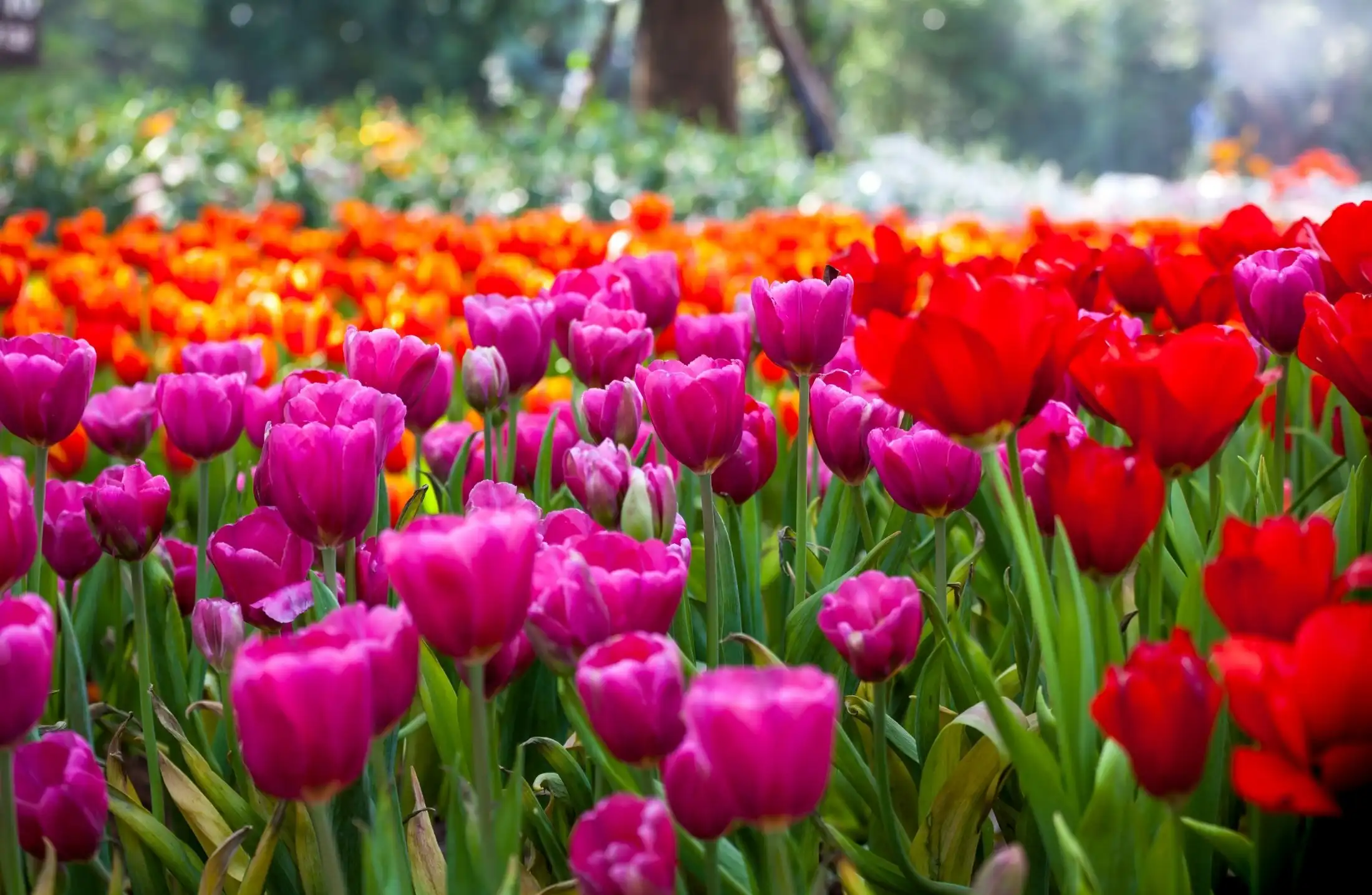
NYC Spring Flowers & Dog Safety
What Every Dog Parent Should Know Before Chasing Tulips

Let's talk about something important that every dog parent should know: spring flowers are stunning, but some of them are also toxic to your dog. This doesn't mean you can't enjoy the season with your pup — it just means going in informed, and ensure they definitely don't consume these. Here's what you need to know.
Tulips & Daffodils: Beautiful, But Dangerous
Tulips contain allergenic lactones concentrated primarily in the bulb, though the stems, leaves, and flowers also carry toxins. Ingestion can cause drooling, nausea, vomiting, diarrhea, and in larger amounts, increased heart rate and difficulty breathing.
Daffodils (narcissus) contain lycorine, an alkaloid that triggers intense vomiting. The bulb is the most toxic part, but all parts of the plant — stem, flower, and leaves — are considered poisonous. Symptoms include vomiting, diarrhea, abdominal pain, and in severe cases, cardiac arrhythmia and tremors.
Both flowers are planted widely across New York City's public parks every spring — which is exactly why we felt it was important to say something. When you're walking through Bryant Park or strolling the Park Avenue malls, keep your dog close, on leash, and away from the beds. A sniff from a distance is fine. Chewing on a stem is not.
If you suspect your dog has ingested any part of a tulip or daffodil, contact your vet or the ASPCA Animal Poison Control Center immediately: (888) 426-4435.
A Comprehensive List of Flowers & Plants Toxic to Dogs
Tulips and daffodils are far from the only offenders. Here is a reference list every dog parent should keep handy — especially heading into spring and summer when gardens, bouquets, and floral arrangements are everywhere.
🌷 Spring Bulbs & Garden Flowers
- Tulips (Tulipa) — bulb most toxic
- Daffodils / Narcissus — all parts toxic
- Hyacinths — bulb most toxic, causes vomiting and diarrhea
- Iris — rhizome most toxic, causes GI upset and lethargy
- Lily of the Valley — highly toxic, affects the heart
- Crocus (Autumn Crocus / Colchicum) — can cause organ failure; note that Spring Crocus causes milder GI upset
🌸 Trees & Flowering Shrubs
- Azalea / Rhododendron — all parts toxic, can cause cardiac issues
- Oleander — extremely toxic, affects the heart
- Sago Palm — highly toxic, can cause liver failure
- Wisteria — seeds and pods most toxic
🌿 Common Houseplants
- Pothos — causes mouth irritation and GI upset
- Peace Lily — causes oral irritation and vomiting
- Dieffenbachia (Dumb Cane) — causes intense oral burning
- Philodendron — causes oral and GI irritation
- ZZ Plant — toxic if ingested
- Aloe Vera — causes vomiting and lethargy
💐 Common Cut Flowers
- Lilies (especially Tiger, Easter, Day, and Stargazer) — extremely toxic to cats; toxic to dogs as well, causing GI upset
- Chrysanthemums — causes vomiting, diarrhea, and drooling
- Baby's Breath — mild toxicity, GI irritation
- Peonies — causes vomiting and diarrhea
- Foxglove — highly toxic, affects the heart
- Hydrangea — contains cyanogenic glycosides; causes vomiting and lethargy
🍃 Outdoor & Wild Plants
- Black-eyed Susan — mild toxicity
- Lantana — toxic berries, affects liver and circulation
- Morning Glory — seeds are toxic, causes hallucinations and GI upset
- Yew — extremely toxic, causes sudden cardiac failure
- Rhubarb leaves — toxic to kidneys
Safe Flowers That Are Dog-Friendly ✅
Good news: not everything is off limits. These common flowers are generally considered safe for dogs:
- Roses (thornless, no pesticides)
- Sunflowers
- Snapdragons
- Camellias
- Orchids
- African Violets
- Marigolds
- Zinnias
- Petunias
- Pansies